

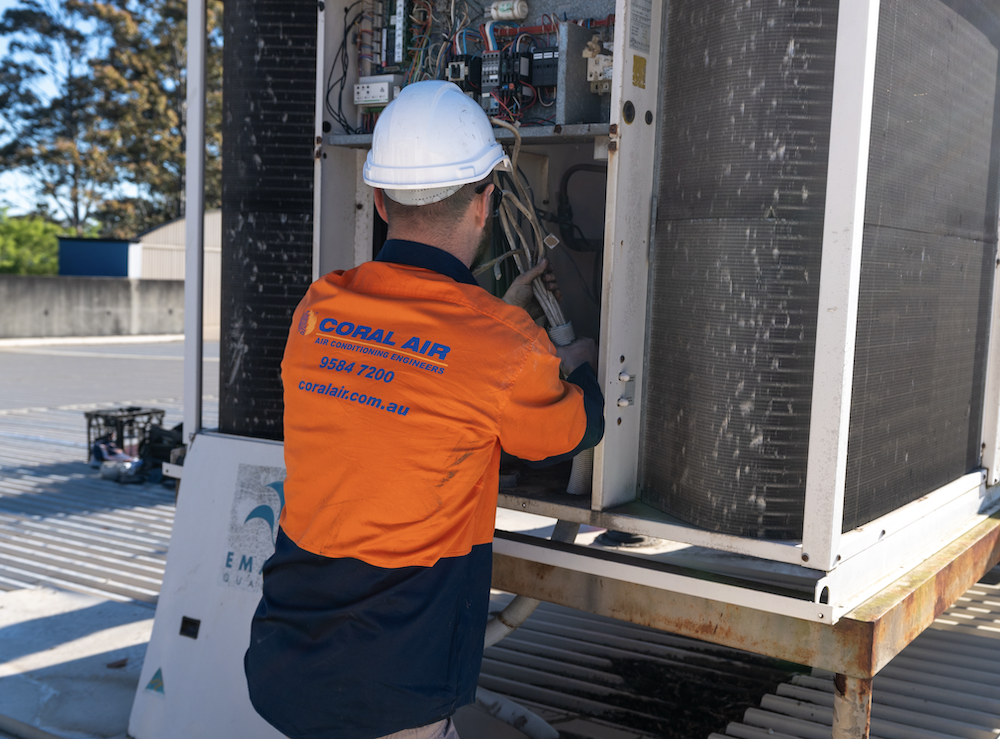
When managing a commercial building, maintaining a comfortable indoor environment is key, not just for tenant satisfaction, but for the efficient operation of your business. Your commercial air conditioning system plays a huge role in this, which is why regular servicing is essential to keep everything running smoothly and cost-effectively.
General Rule: Twice a Year
So how often should you service your commercial HVAC system? While the exact schedule can depend on your system type, building size, and it’s hours of operation, the general industry recommendation for a basic small system is at a minimum twice a year. Typically, this means once in the spring, before the cooling season, and once in the autumn, ahead of the heating period. These strategic service points help ensure your system is prepared to handle seasonal demands. For larger plants we would however recommend ¼ or monthly servicing.
What Happens During a Service?
During these air conditioning service visits, technicians perform a range of tasks such as:
- Inspecting for wear and tear
- Cleaning critical components
- Replacing filters
- Checking system calibration and performance
Skipping these checks could mean small issues go unnoticed, until they turn into major problems requiring urgent air conditioning repairs.
More Usage Means More Maintenance
If your building experiences high foot traffic or uses a more complex HVAC system, you may need more frequent maintenance. Environments like data centres, restaurants, retail spaces, or multi-level office buildings often demand more from their HVAC systems. In these cases, air filters may need to be changed monthly, and equipment should be inspected more regularly to avoid breakdowns that could disrupt your operations.
Avoid Costly Breakdowns
Being proactive about maintenance helps you avoid emergency repairs, especially during peak times like summer heatwaves or winter cold snaps. Emergency air conditioning repair can be costly and, depending on the issue, may result in significant downtime or discomfort for occupants.